

Bio-based Ingeo biopolymer resins for film, injection molding, food serviceware and additive manufacturing. Explore the 4043D, 3052D and 2003D grades and the full Ingeo grade portfolio.
Explore Ingeo PLAAbout the Company
NatureWorks began in 1989 as a Cargill research project exploring plant-derived carbohydrates as feedstock for more sustainable plastics, and its Blair, Nebraska plant came online in 2002. The company is jointly owned by PTT Global Chemical and Cargill, and its Ingeo biopolymer portfolio is produced from annually renewable feedstocks rather than petrochemical resources. An applications development facility and a fermentation laboratory support grade design, processing trials and customer-specific material selection.
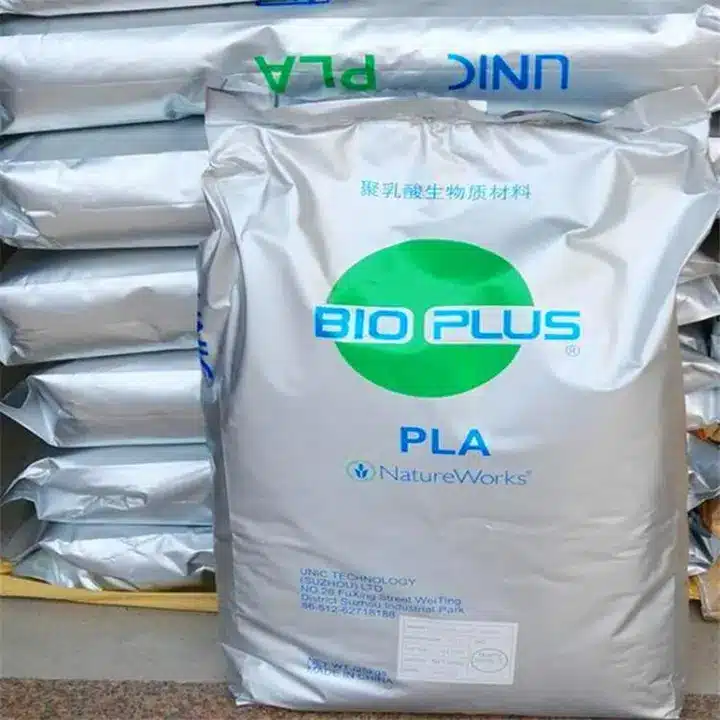
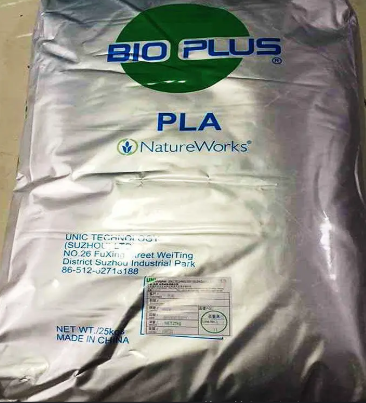
Product Overview
Ingeo is the biopolymer brand of NatureWorks LLC, based on polylactic acid, a thermoplastic resin derived from annually renewable resources. The production route converts plant sugars into lactic acid by fermentation, then into lactide and finally into PLA polymer, giving converters a material that runs on conventional extrusion and injection equipment. Ingeo grades are supplied in pellet form and are selected by melt flow, crystallinity and clarity rather than by a single generic PLA description.
The portfolio spans general-purpose film and extrusion resins, high-flow injection molding grades, fiber and nonwoven grades, blow molding resins and dedicated 3D printing polymers. Grade 4043D is positioned for biaxially oriented film, 3052D for clear injection molded parts, and 2003D for fresh food packaging and food serviceware. Across the range, correct drying and melt-temperature control are the two conditions that decide whether the polymer keeps its viscosity and optical quality.
Grade Highlights
Three frequently specified Ingeo biopolymer grades cover the most common conversion routes: oriented film, clear injection molding and extrusion thermoforming. The figures below are property data published for each grade and are grouped so that a converter can shortlist by melt flow, mechanical strength and heat response. Final grade selection should follow a trial on the intended tooling and line configuration.
Biaxially oriented film with strong optics, twist and deadfold, plus oil and grease resistance; film tensile strength reaches 110 MPa in MD and 145 MPa in TD.
Lubricated high-flow resin for clear cutlery, cups, plates, saucers and outdoor novelties where heat deflection demand stays below 49 °C.
Transparent high-molecular-weight resin for fresh food packaging and food serviceware; extruded roll stock thermoforms readily on conventional equipment.

PLA chemistry gives the Ingeo family a glass transition near 55–60 °C and a crystalline melting range of 145–160 °C, the basis for its heat and clarity profile.
Applications
Ingeo polymers and fibers are converted into products that need renewable content without giving up line speed or visual quality. Each application below maps to a defined subset of the portfolio rather than to a generic PLA resin.
Grade 2003D is specified for dairy containers, transparent food containers, hinged-ware, cold drink cups and food serviceware. Its high molecular weight supports conventional extrusion, and the resulting roll stock thermoforms into clear, rigid shapes.
Grade 4043D converts into biaxially oriented film with gloss of 90 percent and haze of 2.1 percent, making it suitable for candy twist wrap and display packaging. The film also brings advantageous barriers to flavor and grease together with strong oil resistance.
Dedicated Ingeo grades are used as biobased filament for additive manufacturing, where consistent melt flow and low moisture pick-up protect strand diameter and layer bonding. The same portfolio supplies fiber and nonwoven converters through grade-specific melt viscosity control.

Material Value
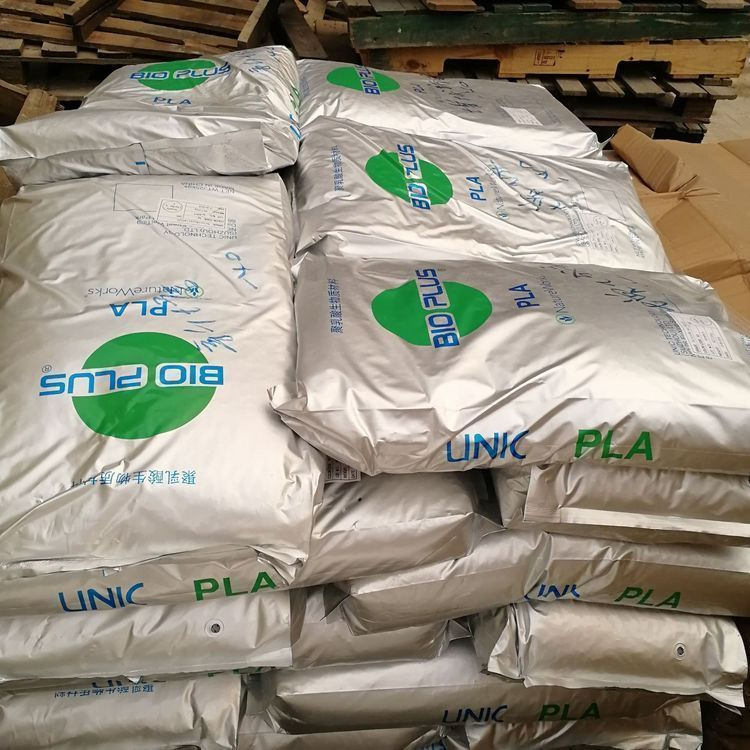
Ingeo starts from annually renewable plant feedstocks rather than petrochemical carbon, then converts fermentation-derived lactic acid into polymer. The material is specified by converters looking for a lower-carbon input to packaging, fibers and durable goods while keeping familiar thermoplastic processing. NatureWorks documents several end-of-life pathways for Ingeo products, which lets brand owners align material choice with local collection and composting infrastructure.
Plant sugars fermented to lactic acid form the polymer backbone, so the resin starts from an annually renewable feedstock rather than a fossil resource.
Drying to below 0.025 percent moisture and stable melt temperatures keep viscosity consistent, so scrap rates stay predictable across long production runs.
Ingeo products can enter multiple circular economy pathways, including industrial composting and recycling routes, matched to the collection systems available in each market.
Processing Guide
Ingeo resins run on conventional extrusion and injection equipment, provided the material is dried and the thermal profile is set for PLA rather than for polyolefin. The sequence below follows the drying, purging and shutdown guidance published for 2003D and 3052D. Starting set points are a baseline for trials, and thin-walled molding can require higher melt temperature.
Bring moisture below 0.025 percent, using about 2 hours at 90 °C for crystallized 2003D pellets, and keep packages sealed after drying so the resin does not reabsorb atmospheric water.
For film extrusion, start near 180 °C at the feed, 200 °C at the adapter and die, and a 202–218 °C melt. For 3052D injection molding, a 200 °C melt with a 25 °C mold is a practical first setting.
Use a general-purpose screw with an L/D ratio of 24:1 to 32:1 and a compression ratio of 2.5:1 to 3:1; for injection, balance screw speed and back pressure at 100–175 rpm to control melt temperature.
At shutdown, purge with a higher-viscosity polystyrene or polypropylene, then reseal unused material. Amorphous regrind must be crystallized before drying to make drying effective.
Full Range
The Ingeo portfolio listed here spans film and sheet extrusion, injection molding, fibers and nonwovens, blow molding, coating and additive manufacturing. The three highlighted grades below link directly to their property blocks; the remaining names are presented so that specifiers can identify the grade family before requesting technical documentation. Grade availability and regulatory status vary by application and market.
Product Range
Each named Ingeo grade in this section has its own product page with grade information, application context and answers to common questions. Use the links below to move from the portfolio overview to a specific model, then return here to compare the rest of the range. Published technical figures are shown on the individual pages where available.
Get in Touch
Share your target grade, conversion route and end-use requirements with our sales contact for Ingeo biopolymer resin. We can discuss property data, drying and processing conditions, and how the Ingeo grade portfolio maps to your application.
Sales contact: Quinn Chai
Request a Quotation
Scan to chat with Quinn Chai on WhatsApp.